
What an international buyer requires before the first order
Certificates, origin documentation, traceability and responsiveness: the real checklist that decides whether your company moves from sample to contract.
22 January 2026
Read article →The African Continental Free Trade Area creates the legal framework for the world's largest market by number of countries. But no treaty moves a container. What separates opportunity from result is execution, and that is where the Angolan company either prepares or is left out.
Angola Global Hub · · 8 min read
On 23 June 2026, in Luanda, the Angolan Government validated its national strategy and action plan to implement the AfCFTA. The Minister of Industry and Trade, Rui Miguens de Oliveira, was direct in stating that the African Continental Free Trade Area is not merely a trade agreement, but the most ambitious economic integration project on the continent. For Angola, the official message is clear: abundant resources, a young population and a strategic location put the country in a position to benefit significantly, provided there is a clear, comprehensive and workable strategy.
The numbers follow the rhetoric. According to Afreximbank's African Trade Report, intra-African trade grew 5.5 per cent in 2025, reaching 213.8 billion dollars, driven by AfCFTA implementation, stronger national trade policies and improvements in transport infrastructure. Angola is among the countries whose intra-African trade has grown the most since the agreement entered into force.
For anyone running a company in Angola, the question is not whether the AfCFTA matters. It is this: what to do, concretely, so that legal market access converts into sales, margins and contracts.
The AfCFTA was signed in Kigali in 2018, entered into force on 30 May 2019 and trading under it began on 1 January 2021. Fifty-four African Union member states signed the agreement, with Eritrea the only exception. It provides for the elimination of customs duties on around 90 per cent of tariff lines, common rules of origin, the reduction of non-tariff barriers and the progressive liberalisation of trade in services, in a market of more than 1.3 billion people.
In April 2025, the 16th Council of Ministers confirmed the conclusion of the Guided Trade Initiative (GTI), the pilot programme that, since October 2022, tested customs, documentation, rules of origin and payment settlement under real conditions. The AfCFTA has therefore stopped being an experiment and entered its operational phase. Companies waiting for perfect implementation are, in practice, competing against those already positioning themselves.
The AfCFTA creates the legal framework. It does not move a single container, classify a single product or issue a single certificate of origin.
This is the point lost in the noise of the headlines. An agreement establishes rights and opportunities. The operation is executed by companies, customs brokers, banks, carriers and customs officers. The distance between signing a treaty and successfully structuring a commercial transaction is exactly the distance AGH helps companies cross.
The topic that dominates public debate is the tariff. The serious work begins with rules of origin. Without robust rules of origin, a product manufactured almost entirely outside Africa could enter through one country and circulate freely across the continent under the appearance of an African product. Preferential access therefore does not depend only on the duty having come down: it depends on the company proving, with correct documentation, that its product qualifies as originating.
This is where apparently routine matters become commercially decisive: tariff classification, the Harmonised System (HS codes), the certificate of origin, production records. A company that classifies its product badly or fails to keep documentary evidence discovers, too late, that its goods no longer qualify for preferential treatment, even though they were manufactured in Angola.
Alongside rules of origin runs a second, less visible and more structural objective: the harmonisation of technical standards. As technical and quality requirements converge between countries, the advantage goes to those who adopt recognised international references. An Angolan producer who certifies its management systems to ISO standards is not only better placed for the African market: it is prepared for the demands of Europe, Asia and the Middle East.
This is precisely the core of Angola Global Hub's work. As DQS's exclusive channel partner in Angola, AGH starts from the international buyer's requirement and works backwards to what the Angolan company must produce, certify and document to reach that contract. Certification stops being an administrative cost and becomes the key to market access.
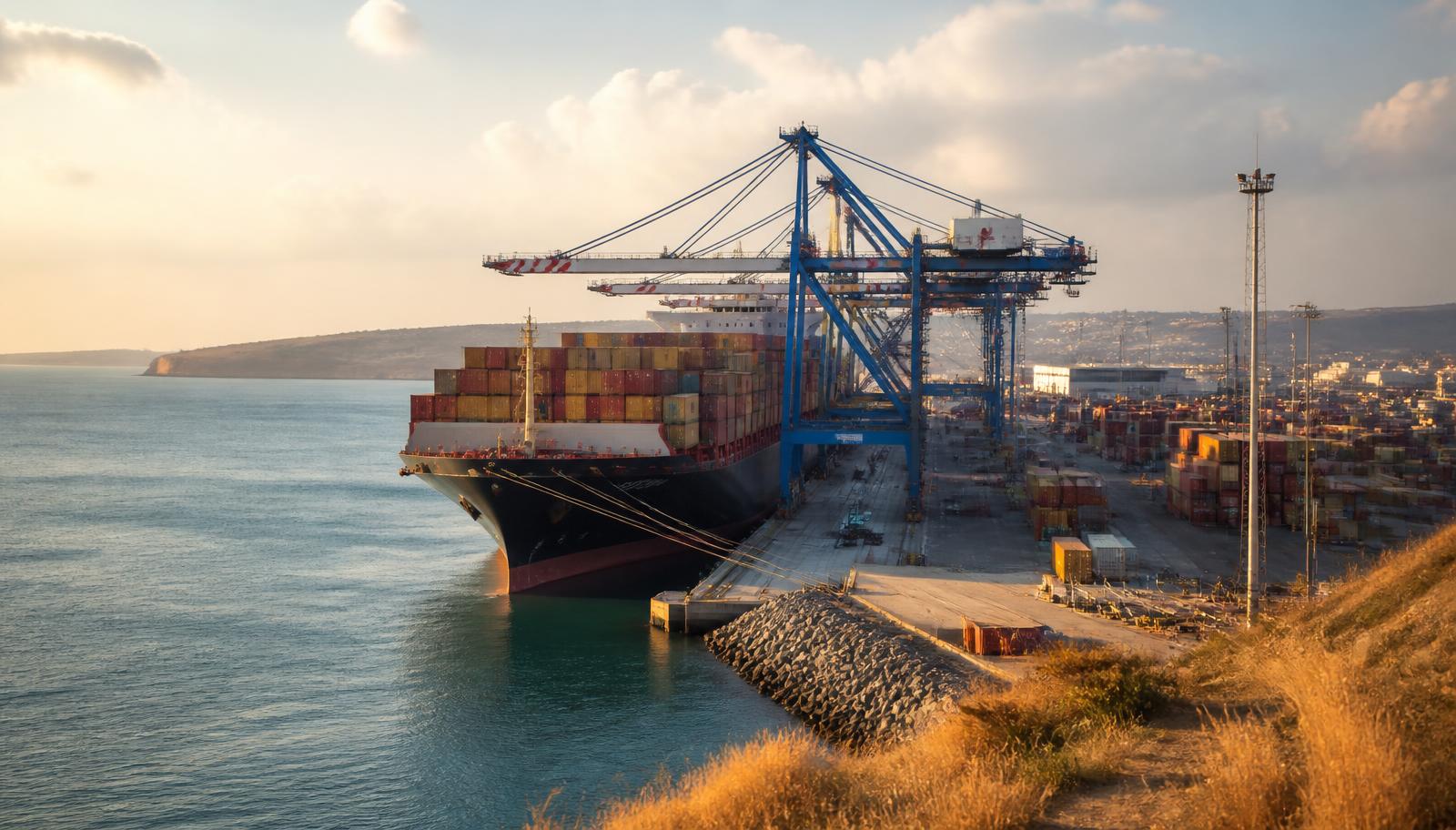
A trade agreement can harmonise rules. It does not replace the infrastructure that moves people and goods. And it is on this dimension that Angola holds an asset few countries in the region can present.
Concessioned in 2022 for a 30-year period to the Lobito Atlantic Railway consortium, the corridor has been operational since 2024. The Angolan section runs for around 1,289 kilometres, from the Port of Lobito on the Atlantic coast to Luau on the border with the Democratic Republic of the Congo, then connecting to the Copperbelt mining regions as far as Kolwezi, a total route of close to 1,739 kilometres. The operation is run by a largely Angolan workforce.
In January 2023, Angola, the DRC and Zambia created the Lobito Corridor Transit Transport Facilitation Agency, which works on harmonising logistics, customs and commercial operations along the route. The corridor is evolving from a simple transport platform into a genuine development corridor, with support expressed by the European Union and the United States.
For the Angolan company, the reading is twofold. On one hand, Lobito positions Angola as the Atlantic gateway to Central and Southern Africa, opening opportunities in logistics, warehousing, cargo consolidation and value addition before export. On the other, the corridor is not yet a cheap solution: the cost of moving goods remains a real obstacle, and the discussion about a free zone linked to the corridor is on the table. The opportunity belongs to those who plan the operation with that context from the outset.
Moving money between African countries was, for decades, as difficult as moving goods. A payment between two neighbouring countries could travel thousands of kilometres through correspondent banks in Europe or the United States, accumulating costs, delays and currency risk. Afreximbank's Pan-African Payment and Settlement System (PAPSS) was created to solve this, allowing settlement in local currencies without passing through the dollar or the euro. By July 2026, PAPSS covered 28 African countries.
Angola, however, is following its own route, and it is worth knowing it. The National Bank of Angola has prioritised integration into SADC-RTGS, the Southern African settlement system, where the Kwanza became accepted as a settlement currency in 2026, ending the rand's position as the platform's only currency. Trade and interbank transactions between Angola and the other SADC countries reached around 3.77 billion dollars in 2025. Joining PAPSS will be assessed by the BNA at a later stage. For anyone exporting from Angola, this means that local-currency settlement today runs mainly through the SADC channel, and the operation must be structured accordingly.
It is worth saying plainly: the AfCFTA creates opportunities, it does not guarantee results. Companies will keep failing for many of the same reasons as always. Some will treat the continent as a single homogeneous market, when it is more than fifty sovereign states with distinct regulatory systems, commercial cultures and levels of institutional development. Others will neglect documentation, misread rules of origin or underestimate the challenges of customs, logistics and payments.
There is also the temptation to pursue continental expansion before consolidating the operation in the home market. Expansion amplifies strengths and weaknesses alike: a company without solid governance, financial discipline and risk management finds that growing outwards only accelerates its internal deficiencies. The companies with most to gain will not necessarily be the largest or the best funded. They will be the ones that understand that the agreement opens possibilities, and that only disciplined execution turns them into sustainable commercial results.
The AfCFTA rewards preparation far more than optimism.
It is the African Continental Free Trade Area, the agreement establishing a single market for goods and services in Africa. Signed in Kigali in 2018, it entered into force on 30 May 2019 and trading under it began on 1 January 2021. It provides for the liberalisation of around 90 per cent of tariff lines and covers more than 1.3 billion people.
Yes. Angola signed and ratified the agreement and, on 23 June 2026, validated in Luanda its national strategy and action plan to implement the AfCFTA.
Preferential access depends on rules of origin: proving that the product qualifies as African, with correct tariff classification and a certificate of origin. Alongside that, adopting management systems certified to ISO standards is decisive, which AGH supports as DQS's exclusive channel partner in Angola.
It is the logistics axis connecting the Port of Lobito to the mining regions of the DRC and Zambia. The Angolan section is around 1,289 kilometres and has been operational since 2024. It is Angola's main structural advantage in intra-African trade.
Not yet. The National Bank of Angola is prioritising integration into SADC-RTGS, where the Kwanza became a settlement currency in 2026, and will assess joining PAPSS at a later stage.
End of FAQ
We measure the gap between your company and international requirements and return a prioritised plan.
Request a diagnosticCertificates, origin documentation, traceability and responsiveness: the real checklist that decides whether your company moves from sample to contract.
22 January 2026
Read article →